After
Haar’s contribution to wavelets there was once again a gap of time in research
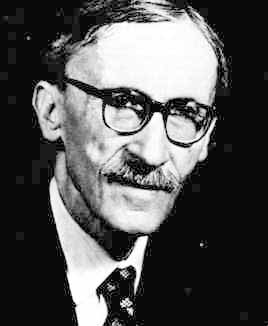
about the functions until a man named Paul Levy. Paul Levy was born
September, 15, 1886 in Paris, France. He came from a family known
for their mathematical abilities. His grandfather was a mathematics
professor, and his father wrote geometry papers for Ecole Polytechnique,
which is a school of higher education (like a university) in Paris, France.
However, Levy didn’t win awards solely in the field of mathematics, but
also in the fields of chemistry and physics. He attended the prestigious
school of Ecole Polytechnique, and he also taught there later in life until
he reached retirement age. He died on December 15, 1971 in Paris
France.
Levy’s efforts in the field of wavelets dealt with his research with Brownian
motion. He discovered that the scale-varying basis function – created
by Haar (i.e. Haar wavelets) were a better basis than the Fourier basis
functions. Unlike the Haar basis function, which can be chopped up
into different intervals – such as the interval from 0 to 1 or the interval
from 0 to ½ and ½ to 1, the Fourier basis functions have
only one interval. Therefore, the Haar wavelets can be much more
precise in modeling a function. If we were to project a function
onto V3 it would be constant on eighths. On the other hand, we could
project the same function onto V4, which is constant on sixteenths, leading
to an even closer projection of the original function. Thus, the
Haar basis functions seemed to be a better tool for Levy while dealing
with the small details in Brownian motion.